Which Tivoli? TivoliTours.com and a Clearer Destination-Management Rebrand
August 1, 2026 · 2 min read
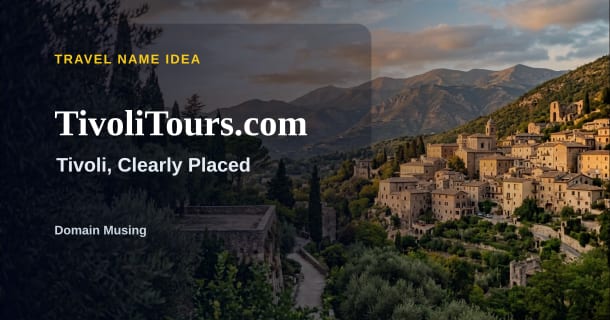
Travel brands are being asked to explain themselves in fewer words and with greater precision. An established Rome-area destination-management company may have outgrown a name tied to one villa, one transfer route, or one founder, while hotel partners still need to understand the offer in seconds. TivoliTours.com could become the clearer rebrand: a destination identity for coordinated Tivoli, Italy programs, broad enough for private clients, small groups, and hospitality partnerships without pretending to be a pan-European parent brand.
The naming problem sits inside Tivoli. In Lazio, it suggests Villa d’Este, Hadrian’s Villa, fountains, ruins, and the Roman countryside. In Copenhagen, Tivoli points just as strongly to gardens, rides, performances, and group visits. That second meaning shouldn’t be ignored. It gives the rebrand its first responsibility: state “Tivoli, Italy” plainly in the descriptor, page titles, maps, and partner materials, with sensible trademark and brand-confusion review before rollout.
Tivoli supplies atmosphere, but Tours supplies scope; the name only becomes complete when the geography is stated plainly. The plural is useful. It leaves room for driver-guided days, museum-and-garden routes, accessible pacing, school visits, and private cultural programs. Fountains and terraces provide the image; Tours brings pickup times, site order, walking demands, and someone accountable when conditions change.
The most convincing deployment may begin in a hotel-partnership sales deck rather than a consumer advertisement. On its cover, TivoliTours.com could sit above “Private Cultural Days in Tivoli, Lazio.” Inside, three calm pages explain transport from Rome, guide credentials, realistic site combinations, mobility notes, and guest support. The final page carries a dedicated support address on the same domain, so a concierge can hand the program to a guest without introducing a second, mismatched identity.
That consistency is practical brand protection. A concise .com doesn’t create confidence by itself, but it gives confidence somewhere stable to gather: the site named in the deck, the address used by support, and the identity a hotel team can verify before referring a guest. Proper email authentication and a consistent sender domain matter here because premium travel service begins long before the driver arrives.
Travel discovery will keep changing—assistants, platforms, referrals, whatever comes next. The durable task is less fashionable: say which Tivoli, explain the journey well, and make every professional touchpoint agree. For an established company growing beyond a narrow transfer or villa name, TivoliTours.com has the useful composure of a destination brand that knows both its romance and its responsibilities.