The Dinner Brief Has an Address: PremierDubai.com and Dubai Corporate Dining
October 23, 2026 · 2 min read
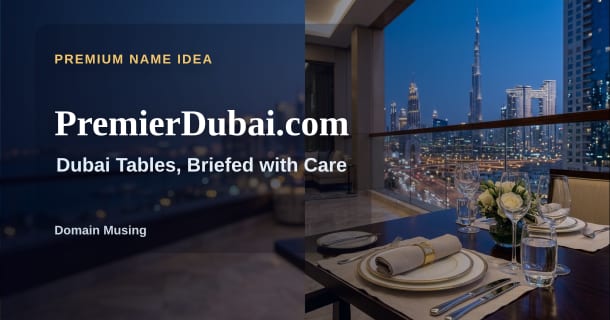
At 4:30, an executive assistant has six restaurant tabs open and a client dinner due to begin at eight. One room is too loud, another is across the city, and a third hasn’t answered the question about dietary requirements. On the laptop, PremierDubai.com opens with a simpler proposition: Dubai dinners chosen for the purpose of the meeting. For a founder launching a corporate dining and client-entertainment concierge, that could be a focused and credible first business.
The interesting thing is grammatical. “Premier” modifies Dubai, not a restaurant. The name doesn’t bind the operator to one chef, cuisine or neighbourhood; it suggests a carefully edited version of the city. The two words read almost like an instruction: find the premier Dubai for this guest, this conversation, this particular evening.
A clear first homepage could begin with a dinner brief rather than a gallery of chandeliers. Who is being hosted? Is the aim negotiation, celebration or an unhurried introduction? The form could record the hotel, preferred district, group size, privacy level, dietary and accessibility needs, transport plans and tolerance for a long tasting menu. Beneath it, plain language should define whether the service recommends venues, arranges reservations, collects deposits or works as a disclosed venue partner. A booking request isn’t a table guarantee, and a thoughtful hospitality brand should say so.
The onboarding email then becomes part of the service, not an administrative afterthought. Sent from an address carrying PremierDubai.com, it could summarise the selected setting, reservation status, cancellation terms, guest notes, payment responsibilities and the person handling changes. That consistency matters when an enquiry begins through a hotel referral, Instagram message or WhatsApp introduction. The .com doesn’t prove access or judgment by itself. It gives the operator one controlled place to demonstrate both, with first-party policies that guests, search tools and hospitality partners can interpret clearly.
Later, the same brand might extend into private chefs, milestone dinners or post-meeting hosting. But the useful beginning is narrower: one accountable dining brief, one carefully matched room, one confirmation that leaves little uncertain. By early evening, the restaurant tabs are closed. The final email remains open, with PremierDubai.com quietly visible above the plans for the table.